Start with records, rather than one impressive percentage
A useful solar review compares measured energy, the site's electricity use and the costs on the actual tariff. A lower electricity bill alone does not tell you how much of the change came from solar.
The first 60 to 90 days can reveal faults, settings that need attention or gaps in the monitoring. That is a useful early review, but it is not a full year of performance and should not be presented as an annual measured saving.
Keep energy and money separate
Record solar generation, grid imports, exports where applicable, and consumption if the installation measures it. Check the dates and whether data is missing. A dashboard value based on a configured tariff is an estimate of money, even when the underlying energy is measured.
Not every solar kilowatt-hour has the same financial value. Electricity used on site, electricity exported and energy passing through a battery may have different consequences. Fixed charges and some demand charges may remain. Use the bill and tariff structure that actually apply.
Explain what changed at the property
Compare similar periods where possible, and record changes such as occupancy, operating hours, new equipment, holidays, shutdowns or a change in tariff. Weather and season affect solar production; changed consumption can also change how much solar is used on site.
For a business, reduced diesel use is a separate line of evidence. Keep generator runtime and fuel records, and describe any changes in outage conditions or generator use before attributing the difference to solar.
Use a simple review sheet
- The review period and the number of days with complete monitoring data.
- Measured solar production and grid purchases, with the meter or monitoring source identified.
- The comparison period, tariff and changes in site activity.
- Estimated avoided electricity cost, with the calculation assumptions recorded.
- Maintenance, finance and other costs included or excluded.
- Faults, unusual events, corrective actions and the next review date.
Read the text explanation and sources
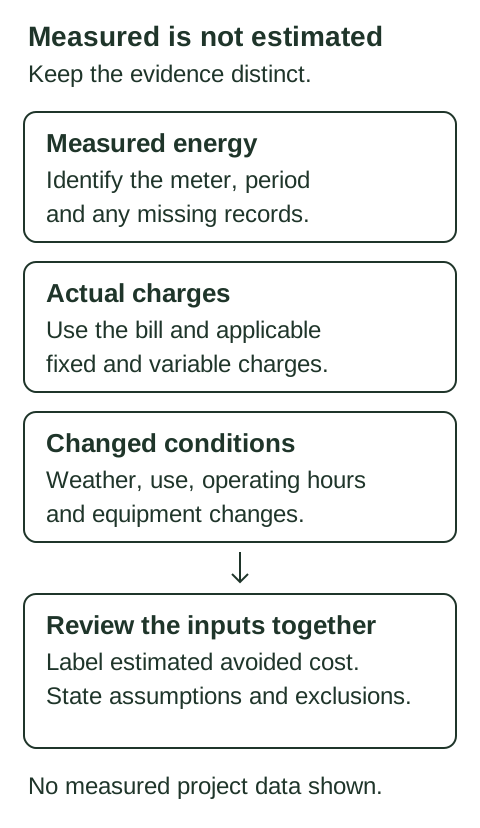
- Identify the meter, review period and missing records for measured energy.
- Use the actual bill and the applicable fixed and variable charges.
- Record weather, consumption, operating-hour and equipment changes.
- Review these inputs together, label estimated avoided cost, and state assumptions and exclusions.
- No measured project data or numerical savings are shown.
Sources supporting this illustration
Treat unexplained differences as questions to investigate
Lower production can have several explanations, including weather, shading, a change in settings, a missing measurement or a fault. Compare the evidence before deciding to replace equipment or buy more panels or batteries.
For a system review, share your location, equipment details and what you are seeing. We can request monitoring access and electricity records through a private channel. Do not post account credentials or an unredacted bill publicly.