
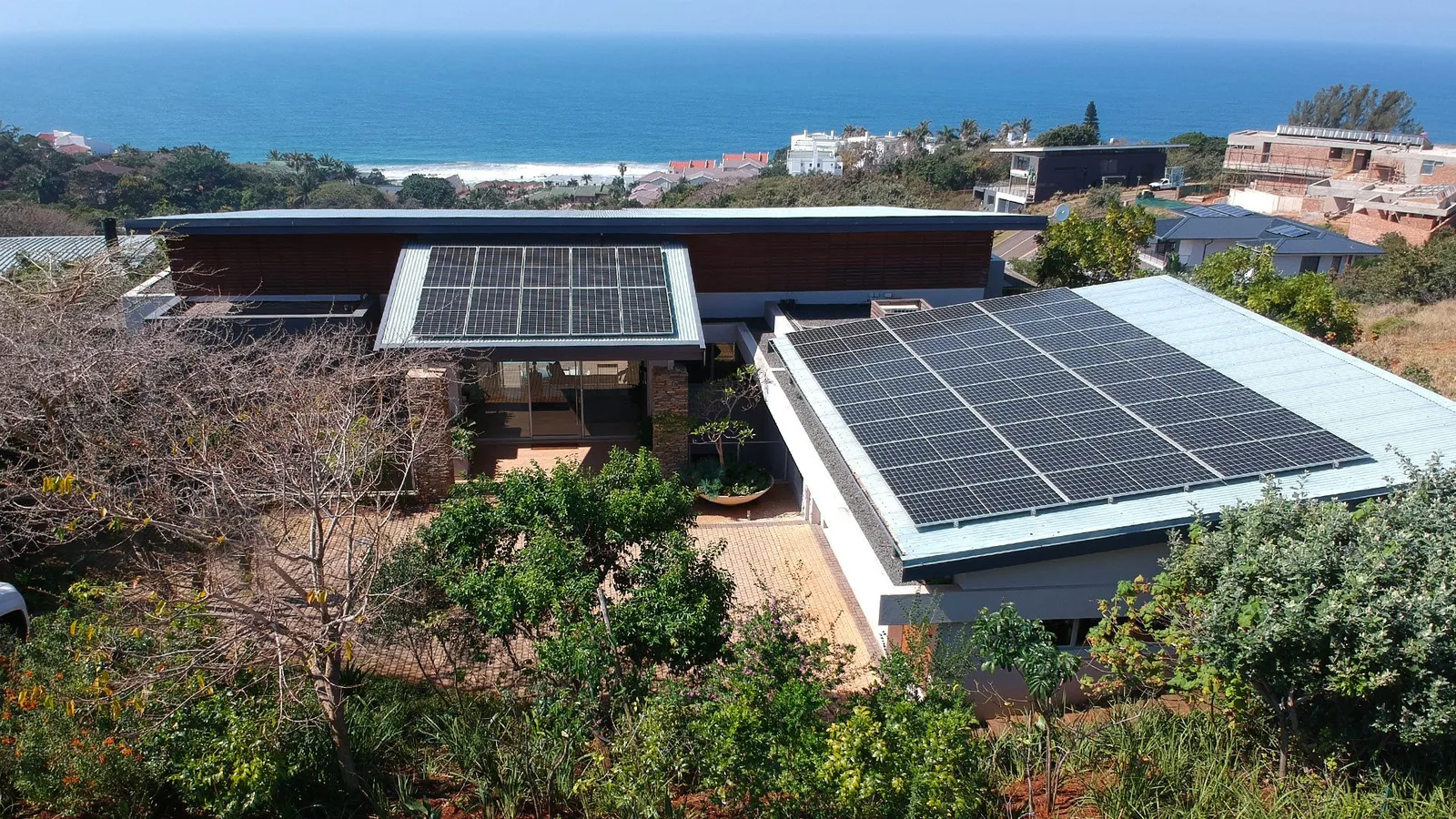
Three questions make a better starting point
Decide what you want to reduce, what must stay on and how much independence you need. Solar panels produce energy when sunlight is available; a battery stores energy; an inverter and the electrical design determine how that energy can be used.
A package described only as a '5 kW system' leaves important questions unanswered. That number might describe inverter output or the solar array. It does not, by itself, tell you the battery capacity or how long your appliances can run.
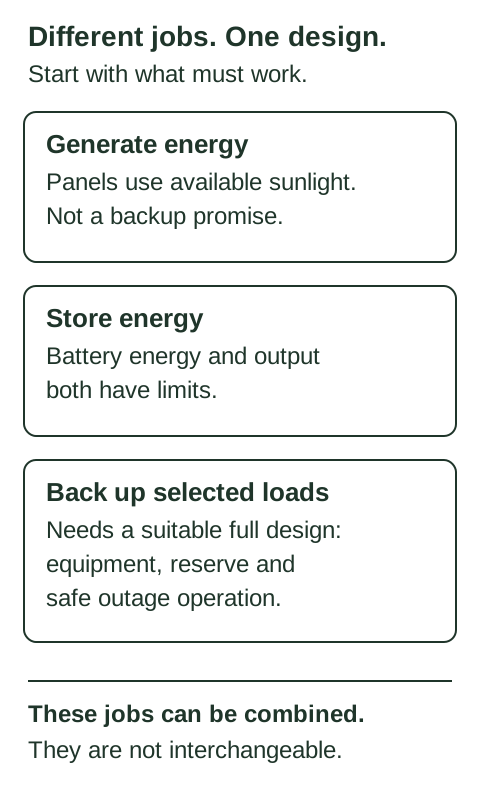
Read the text explanation and sources
- Generate energy: panels use available sunlight; this is not a backup promise.
- Store energy: battery energy and output both have limits.
- Back up selected loads: equipment, reserve and safe outage operation need a suitable full design.
- These jobs can be combined, but they are not interchangeable.
Sources supporting this illustration
Grid-tied solar focuses on useful daytime generation
A conventional grid-tied installation can supply electricity while the grid is present. Its financial value depends on the amount of production you can use and any approved export arrangement. It should not be assumed to provide backup when the grid fails.
Backup operation requires suitable equipment, controls and an electrical arrangement designed for that purpose. Ask for a clear explanation of what disconnects, what remains powered and how the system returns to normal operation.
Battery backup starts with the essential loads
List the circuits you need during an outage. Lights, internet and refrigeration are a different task from running every geyser, stove, pump or air conditioner. The installer needs to consider simultaneous demand and starting loads, as well as total energy use.
Battery capacity is normally expressed in kWh. Usable energy depends on the product, settings and operating limits. Backup duration also depends on the actual load and conversion losses. A runtime estimate should state its assumptions instead of promising that an entire house will run for a fixed number of hours.
Hybrid and off-grid are design choices
A hybrid installation combines energy sources and storage under a coordinated design. It may use solar to serve loads and charge batteries while retaining the grid. The way it behaves during an outage depends on the installation, rather than the word 'hybrid' on a brochure.
Off-grid operation is a more demanding requirement: the design must provide for periods when solar production is low and consumption continues. Storage, load management and a backup source may all need consideration. Keeping a grid connection can be a practical choice even when a property buys much less electricity.
Compare complete proposals
Different proposals suit different priorities. Send us your location and the problem you want to solve. If you already have equipment, include the models so we can check compatibility before recommending an upgrade.
- Which circuits are included in backup, and which are excluded?
- What are the inverter output, solar-array rating and usable battery capacity?
- What assumptions support the production and runtime estimates?
- Which site work, approvals, documentation and handover are included?
- What monitoring, support and future expansion are actually supported?
Sources and further reading
See the approach in practice
Home
Solar and backup for your home
Practical solar and battery systems for the way you live.
Explore home solar